City centre
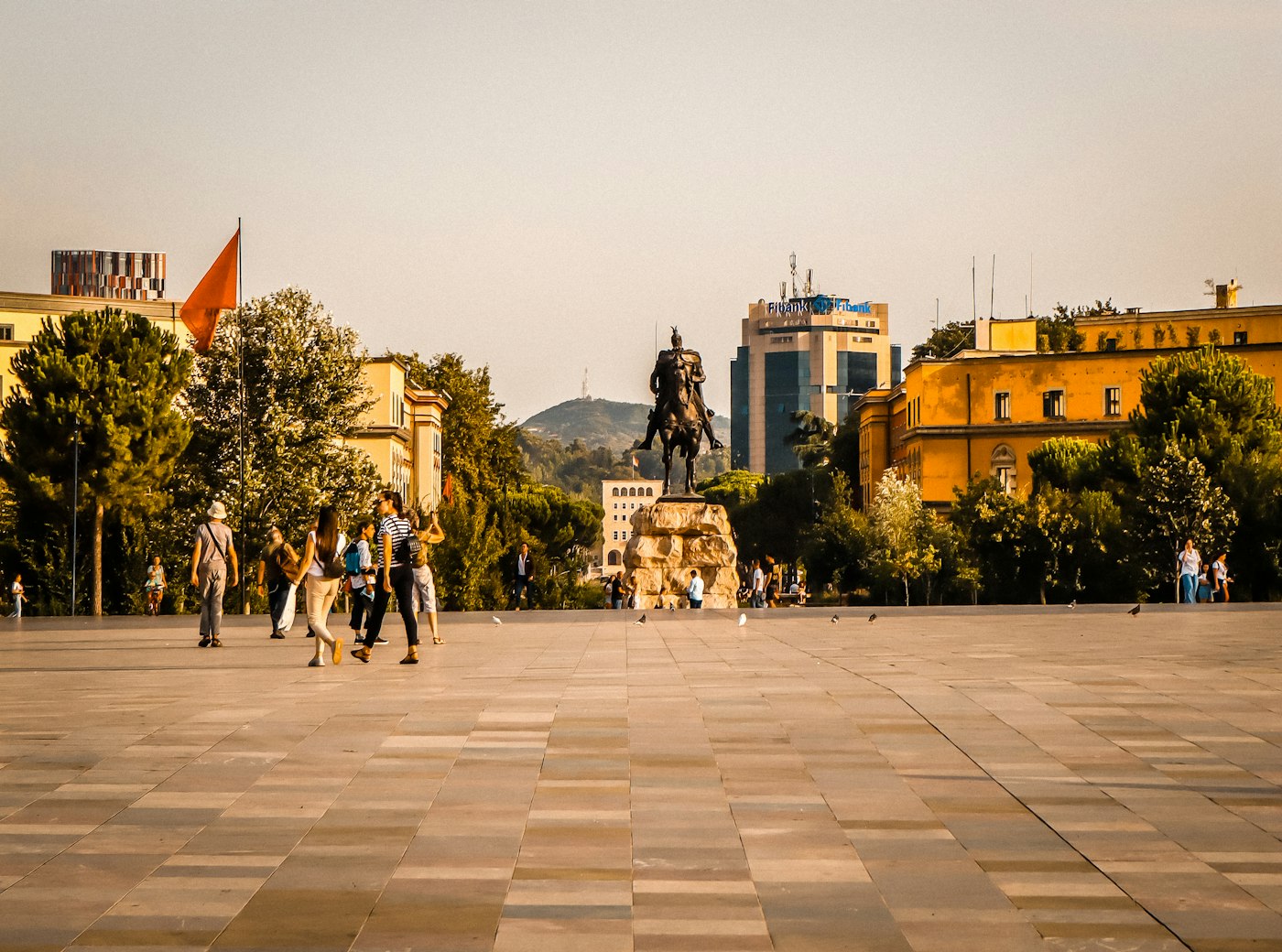
Skanderbeg Square
The city's vast central plaza, ringed by the Et'hem Bey Mosque, the clock tower and the opera house — repaved and pedestrianised, now the natural starting point for any walk into the centre.
Central Albania · Albania
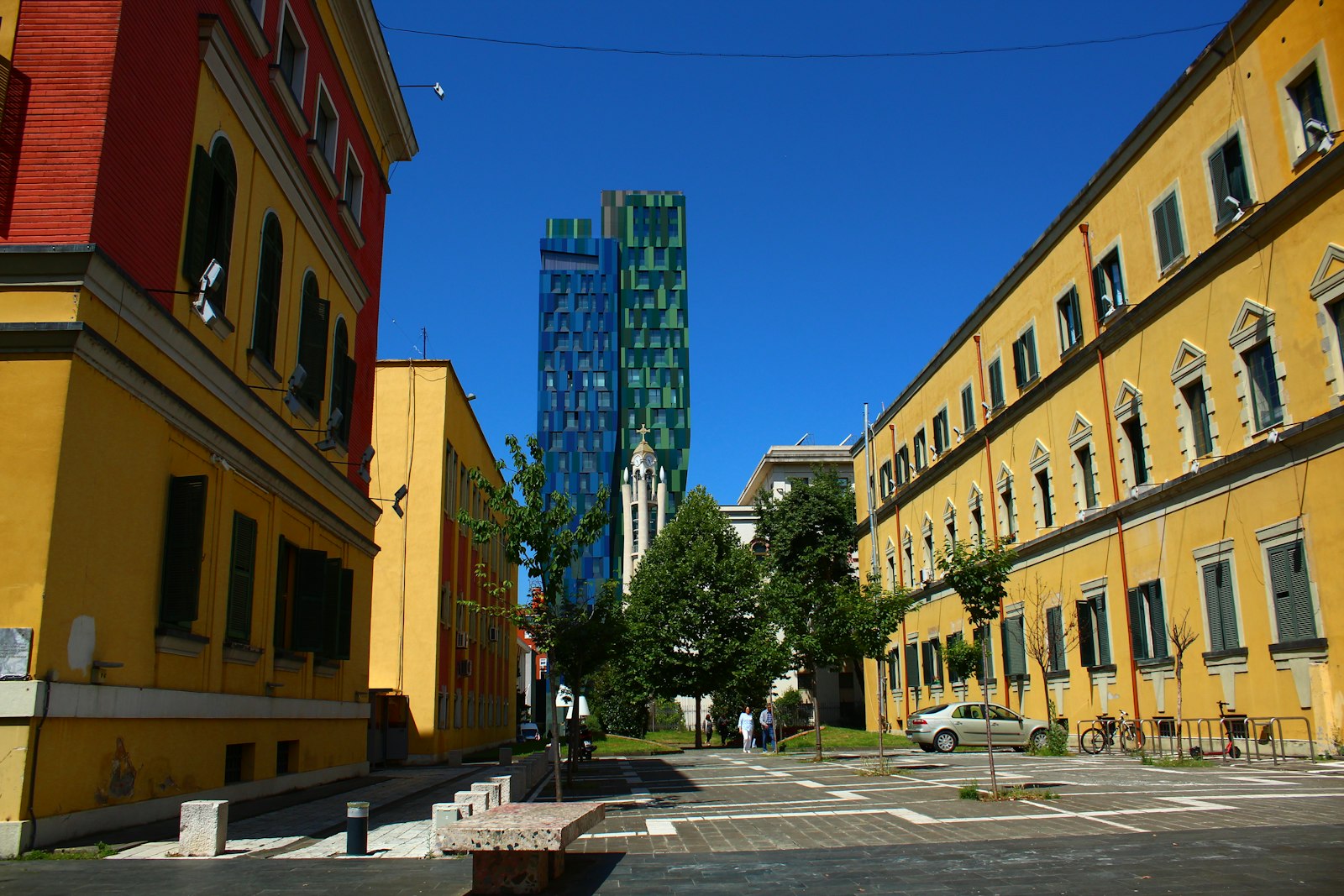
A city that repainted itself: bold geometric color over Tirana's communist-era apartment blocks, mixed with Ottoman mosques, Italian-era buildings and the Blloku café scene.
See the cityIn the early 2000s, Tirana’s grey Communist-era apartment blocks were painted in bold geometric color — a project that turned an entire skyline into public art. Today the city mixes that color with Ottoman mosques, Italian fascist-era buildings, and a repurposed Cold War bunker you can walk into.
See & do
The city's vast central plaza, ringed by the Et'hem Bey Mosque, the clock tower and the opera house — repaved and pedestrianised, now the natural starting point for any walk into the centre.

A former Communist-era museum, long derelict, now a climbable public rooftop and cultural venue after a full renovation — one of the clearest single images of the city's turn.

The country's main museum sits on Skanderbeg Square behind 'The Albanians', the enormous socialist-realist mosaic that is probably the most photographed wall in the country.

An early-19th-century mosque on the corner of Skanderbeg Square, its portico painted with frescoes of trees, waterfalls and bridges — unusual imagery for a mosque, and beautifully restored.

The Museum of Secret Surveillance, in the villa the Sigurimi used to bug and watch the city from. Small, chilling and very well done — the best single hour on Communist-era Albania.
A nuclear bunker built for Communist-era leadership, converted into a museum on Albania's Communist years. Two sites: Bunk'Art 1 (edge of the city) and Bunk'Art 2 (Skanderbeg Square).
Once a walled district off-limits to ordinary citizens, reserved for Communist-party leadership. Now the city's café, bar and boutique quarter — the natural evening base.
Forest, an artificial lake and the presidential residence, a short walk south of the centre — the city's green lung, with Dajti Mountain visible behind it.
Rruga e Kavajës and Rruga e Durrësit carry the boldest of the repainted Communist-era apartment facades — the project that turned an entire skyline into public art in the early 2000s.
Tirana International Airport (TIA, “Rinas”) sits about 17 km north of the centre. Buses and taxis run the route in roughly 30 minutes.
The centre is walkable. For anything further, city buses are cheap and taxis are metered and inexpensive.
April–June and September–October bring mild weather without the summer heat or crowds.
Straight answers